Long ago, the Kings made sure No. 16 wouldn’t be worn anymore. Numbers 4, 18, 20 and 30 are no longer in commission — and 99, of course.
On Saturday, a seventh number will be permanently shelved. Dustin Brown — No. 23 — will join Marcel Dionne, Rob Blake, Dave Taylor, Luc Robitaille, Rogie Vachon and Wayne Gretzky on a wall high in Crypto.com Arena as the former Kings captain will watch his number be retired on Saturday night.
Advertisement
It will be a momentous evening for Brown, the hard-hitting winger who played all 18 of his NHL seasons with the franchise and served as its captain for eight of those. A statue of his likeness will also be unveiled outside the arena, putting him alongside Kings legends Gretzky and Robitaille, Hall of Fame broadcaster Bob Miller and in company with other Los Angeles sports luminaries such as Magic Johnson, Jerry West, Kareem Abdul-Jabbar, Chick Hearn, Shaquille O’Neal, Elgin Baylor and Oscar de la Hoya.
Why is Brown deserving of all this? Easy. The kid from Ithaca, N.Y., is the first Kings player to lift the Stanley Cup, which he did twice in a three-year span. He is the club’s all-time leader in games played (1,296) but he could also do more than lay big hits on the opposition, as he ranks in the team’s top 10 in six offensive categories. What defines his career most is arguably being the greatest leader in franchise history.
“Just the way he treated every single day,” said goalie Jonathan Quick, a teammate for 15 seasons. “The way he showed up, led by example. His ability to make big plays in big games over and over again. Leading us to two Cups and countless playoff victories and series wins. Everything’s there. There wasn’t an aspect in the game that he didn’t have an impact on.”
“How about this?” current captain Anze Kopitar said. “Why is he not deserving? Give me one reason why he wouldn’t be. I can’t find a reason why he wouldn’t be. Getting all the attention, which he absolutely hates, but we’ve got to give it to him. It’s so very deserving. What he’s done around here, it’ll be tough to replicate. If it’s even possible.”
Brown is the first of the Kings’ Stanley Cup winners to be feted, and that opens the door. Who else will one day receive a similar honor? Who should be put under consideration?
Advertisement
Ahead of Brown’s big night, I’ve enlisted the help one of The Athletic’s hockey editors, Rich Hammond, in this discussion. You might know him as a Kings beat writer from 2005-16, and we both watched this era of Kings hockey play out first-hand.
Stephens: Rich, who do you think will be next to see his number get put on the Crypto wall? Maybe a better question is, who deserves to be next?
Hammond: I don’t mean this as a criticism in any way, but the Kings have made the decision for themselves here. In retiring Brown’s number less than a year after his retirement, they’ve essentially cemented that eventually he will be joined by Quick, Kopitar and Drew Doughty. Based on age, and where they are in their respective careers, I presume that will be the order.
Brown isn’t going to make the Hockey Hall of Fame, and for many NHL teams, that’s the main standard for jersey retirement. But Taylor hasn’t made it in either, and in many ways, Brown was the next-generation Taylor. You can’t honor Taylor without honoring Brown, whose talent, longevity and leadership carried the Kings higher than ever before. But then you can’t honor Brown without honoring Kopitar and Doughty, two of the top players of their generation. And then how can you leave out Quick, a Conn Smythe Trophy winner and the backbone of those two Cup teams?
The only unfortunate thing is the optics. The Kings could end up in a situation in which they have 10 jersey numbers retired and only two Stanley Cup championships, whereas a franchise like Edmonton has five championships and only eight numbers retired. Pittsburgh has won the Cup five times and has honored only two players: Mario Lemieux and Michel Briere, a well-regarded young player who died after a car accident. On the other end, Buffalo has never won the Cup and has eight numbers retired. Does it matter, Eric? Should we avoid the temptation to be stodgy and, instead, just celebrate this for the fun that it is, or do these things get out of control? Toronto has honored 19 players!
Advertisement
Stephens: I’m of the opinion that it’s fine for them to have as many numbers as they’ve had, plus the trio of Quick, Kopitar and Doughty that will be coming in the future. St. Louis, another team in that “Second Six” group, has retired eight numbers in addition to “honoring” five other numbers – one of them being No. 7, which was worn by four players. The Kings have been around for more than five decades. They may not have had a plethora of great teams over that span, but they have had a number of legitimately great players.
Does Brown constitute what a “great” player is? I’m not going to minimize the impact that he had in their most successful period. He played a hard game for a long time and it wasn’t as if he was a role player with amazing staying power. But in recognizing Brown in this way immediately, the same basically must be done for Doughty, Kopitar and Quick once they’ve finally called it a day. That’s the thing with Brown and his former cohorts – they’ve played their entire careers with one team. Calgary, for instance, has yet to retire the numbers of Al MacInnis and Joe Nieuwendyk, two Hall of Famers. Those two were great as Flames, but they also spent just as much time in their long careers away from Calgary.
You mentioned Pittsburgh. The Penguins are an interesting case in that they’ve also had a lot of great players, but Lemieux was the only Hall of Famer to play his entire career with them. They’ll retire Sidney Crosby’s No. 87 and, presumably, Evgeni Malkin’s No. 71. But they need to hang Jaromir Jagr’s No. 68 to the rafters and will presumably do it once Jagr has officially finished playing professionally. It’s been time for Detroit to add Sergei Fedorov’s No. 91 to their long list.
Back to the Kings, whom Sean McIndoe said nailed the number-retirement deal perfectly when he broke down every team’s list at this time last year. Now that we have no problem agreeing on the Quick-Kopitar-Doughty triumvirate, Rich, is there another player in their history worth considering? What do you think of Bernie Nicholls, if we want to dig into the past? Or how about Justin Williams, who captured a pretty notable trophy during his time in L.A.? Should they have an “honored” list of players and sort of unofficially shelve their numbers?
Hammond: I love the idea of a team Hall of Fame, which formally recognizes players without putting their numbers on the wall. They could even carve out a room at the arena and/or the practice facility, and dedicate it to some of those players. Williams and Nicholls would be there, along with Butch Goring, Charlie Simmer and others. The Kings wouldn’t even have to unofficially shelve the numbers. For years, they did the “Legends Nights” to honor former greats, but this would be a way to do it permanently without retiring numbers. I wish all teams would do something like this.
Eric, you’ll be there on Saturday to watch Brown get honored. Any memory come to mind? For me, beyond the obvious of lifting the Cup, it will be his teeth-jarring hit on Vancouver’s Henrik Sedin in Game 3 of the 2012 first round. The Kings were already playing well in that series, but that hit indicated that they were serious.
Stephens: You know, Rich, it’s interesting because I come at it from a little different point having covered that rival team down in Orange County for a long time and being around the Kings at times but not on a daily basis. A few opposing players might not be crazy about the hits to their knees but I always saw Dustin as a tough customer who played an honest game and earned a lot of respect in many corners of the hockey world. He didn’t just hit people. He could beat you on the scoreboard as well and he was a consummate professional who maximized his ability.
Advertisement
I did spend some time around the team for the 2012 and 2014 playoff runs and what I enjoyed most is how he embraced the spokesman role as captain and didn’t just dig into a book of cliches when you talked with him. He was – and still is – thoughtful, engaging and reflective. To me, it’s all the more impressive knowing that he dealt with a speech impediment in his younger years. He was an outstanding captain.
On the opening day of training camp, Dustin came to watch his old teammates. I hadn’t been around him in a long time and while I did want to talk about Drew for my NHL99 piece on the defenseman, I didn’t expect him to remember me. Dustin was the one who called out to me by name and initiated what would be a 15-minute conversation, just catching up about what the other was doing in his life. I never expect that. But a small gesture like that from someone who accomplished so much can tell you a lot about a person.
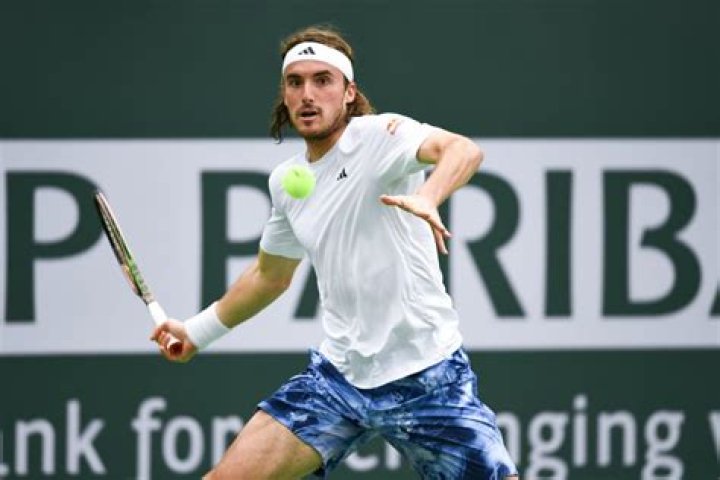
(Photo of Dustin Brown in 2012: Bruce Bennett / Getty Images)